


50 Percent Window Tint

50% tint lets half the visible light through the glass. From outside the car it reads as almost stock, and from the driver's seat it cuts glare without darkening the road at night. That number tells you how the glass looks. It tells you nothing about how much heat the film stops.
Heat rejection comes from what the film is made of. A cheap dyed film at 50% will bake you. A nano ceramic film at the same 50% blocks most of the infrared coming through the window, so the cabin stays noticeably cooler while the glass still looks light. Same shade, completely different result, and that gap is where most people waste their money.
What 50% Window Tint Means
VLT stands for Visible Light Transmission. A 50% film lets 50% of visible light pass through. The other half gets blocked or absorbed.
That number only measures light you can see. It says nothing about heat or UV. People often mix this up. They think 50% means the film blocks half the heat. It does not. Heat rejection depends on the film construction, not the shade.
How Dark 50% Tint Looks
From outside, 50% looks light. On a white or silver car it almost disappears. On a black or dark blue car it shows a bit more. The cabin stays easy to see during the day. At night someone standing a few feet away can still see your face clearly.
Inside the car the view stays clear day and night. Glare drops, but you do not lose the road, signs, or other cars. Most drivers call this the lightest tint that still "looks tinted."
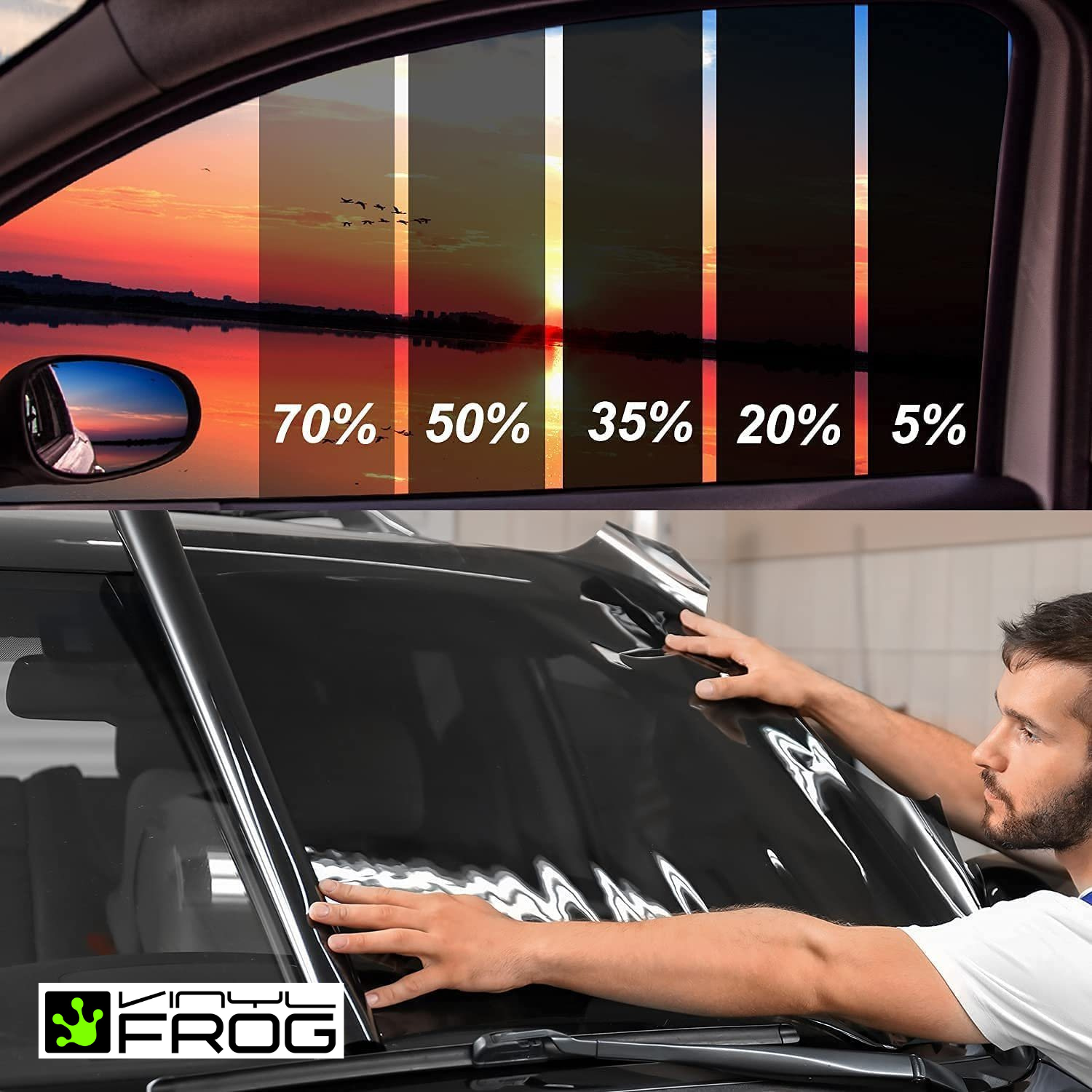
Installation Tips and Tools
- Clean the glass first. Any dust or dirt leaves bumps. Use a good window cleaner and a lint-free cloth.
- Cut the film a little larger than the glass.
- Spray both the glass and the adhesive side with slip solution (water mixed with a few drops of baby shampoo works).
- Lay the film, squeegee from the center out, and work the edges.
- Curved glass needs a heat gun. Keep the gun moving and shrink the film slowly so it lies flat.
- Common tools: hard card squeegee, soft squeegee for final pass, heat gun, utility knife with fresh blades, and a spray bottle.
- Let the film cure before you roll the windows down. Light films usually need one to two days. Full cure can take a week in cooler weather.
Is 50% Tint Legal
Laws change by state and by window. Front side windows often allow 35% to 70% VLT. Many places accept 50% on the fronts. Rear windows and the back windshield usually allow darker film or no limit.
Windshields are stricter. Most states only allow a strip above the AS-1 line. Full windshield tint, even at 50%, can get you a ticket. Always check your state rules and any places you drive through often. A tint meter reading settles arguments with officers faster than words.
How Dark Does 50% Window Tint Look?
A 50 percent tint is considered a light shade, so it doesn't dramatically change the appearance of your vehicle. During the day, the windows look slightly darker than standard glass, but the cabin remains partially visible from the outside. It offers a subtle upgrade rather than a heavily tinted look, making it a great option for drivers who prefer a clean and professional finish.
Dyed, Carbon, Ceramic & Other Film Types
Not every 50% film performs the same. The type of film decides heat rejection, how long the color lasts, and whether it interferes with signals.
| Type | UV Blocking | Heat Rejection | Signal Safe | Lifespan | Cost |
|---|---|---|---|---|---|
| Dyed | Low | Low | Yes | 1–3 years | Lowest |
| Metalized | Good | Good | No | 5+ years | Mid |
| Hybrid | Good | Moderate | Mostly | 5+ years | Mid |
| Carbon | Up to 95% | High | Yes | 5–7 years | Mid-high |
| Ceramic | Up to 99% | Highest | Yes | 7+ years | Highest |
| Crystalline | High | Moderate | Yes | 5+ years | High |
Dyed film costs the least but fades and blocks little heat. Metalized reflects heat well yet can mess with GPS and toll tags. Carbon holds its color and stays signal-safe. Ceramic costs more but rejects the most heat and UV while staying clear.
Pick the film for the job you want done. Privacy is not the main reason people choose 50%. Comfort and UV protection are.
Pros and Cons of 50% Tint
Pros
- Keeps a near-factory look
- Cuts glare without hurting night vision
- Blocks most UV rays and protects the interior
- Legal in many states for front windows
- Ceramic versions still reject strong heat
Cons
- Limited privacy people can still see inside
- Cheap films fade and block little heat
- Full windshield use is illegal in most places
- Looks lighter on white cars than dark ones
Measuring and Checking Your Tint
Buy or borrow a tint meter if you want exact numbers. Hold it on the glass before and after install. The reading should land close to 50%. Factory glass already blocks some light, so the final number can sit a few points lower.
Look for even color, no bubbles, and sharp edges. Drive at night and in bright sun. If the view feels clear and the cabin stays cooler, the film is doing its job.
50% tint works when you want less glare and better UV protection without a dark look. Choose ceramic or carbon if heat is the main goal. Check local laws first. Clean install and the right film make the difference between a job that lasts and one that fails in a year.
Frequently Asked Questions
Q. Can you see through tinted windows at night?
Yes, you can see clearly through 50% tint at night, darker shades reduce visibility more.
Q. What tint percentage do most drivers choose?
Most drivers pick 35% or 50% for front windows because they balance looks, legality, and visibility.
Q. How much does it cost to tint a car's windows?
Full-car tinting usually costs $150-$600 depending on the vehicle size and film quality.
Q. How long does window tint last?
Quality ceramic or carbon tint lasts 7-12 years or more with proper care; cheap dyed film often fails in 2-5 years.
Q. Does window tint get darker over time?
No, a good tint stays the same shade, cheap dyed film can fade or turn purple instead.
Q. Which window tint type is best?
Ceramic is the best overall for heat rejection, clarity, and long life without signal interference.
- Choosing a selection results in a full page refresh.

!