


Clear Wraps For Cars

A clear car wrap is a see-through film placed over your car's paint. It protects against small rock chips, scratches, and sun damage, without changing the car's color. Good films last for years thanks to a top layer that heals itself when warm, plus a layer underneath that blocks sun damage. Peel off a good film years later, and the paint underneath still looks brand new.
The question people ask us most is, will clear wrap turn yellow or crack on a white car? Here's the honest answer, good film stays clear for years, even on dark cars. On white and silver cars, complaints after a year are usually not full yellowing, just a thin edge line from trapped dirt, or a cheaper film going slightly yellow at the edges. Almost always, the wrong film was picked or the edges weren't sealed properly, not the film category failing. Keep this in mind as you read on, since it comes up again below when we talk about install quality and warranties.
Clear Vinyl vs. Clear PPF, What's the Difference?
Many buyers think clear wrap and paint protection film (PPF) are different things. They're not; they're the same type of product, just made differently.
Clear PPF is a stretchy plastic film with a special top coating that lets it "heal" small scratches. When it warms up, from the sun or a heat gun, light scratches and swirl marks smooth out and disappear.
Clear vinyl is a simpler, cheaper film without this self healing coating, so any scratch stays permanently. It's thinner and cheaper, but doesn't protect against real impacts the way PPF does.
The glue underneath matters too, better films let you reposition the film during install and peel off clean years later, while cheaper glue grabs instantly and can leave a sticky mess.
The simple rule, don't use vinyl where you need real protection. On a bumper or the front edge of the hood, thin vinyl won't hold up to real rock hits. Save vinyl for low-damage areas, and use PPF where the car actually gets hit.
Where Should You Put Clear Film on Your Car?

This is something people genuinely disagree about, and it depends on how you use your car.
Covering the whole car protects every panel equally, keeps the car looking its best at resale, and avoids a visible line between protected and unprotected paint. The downside is cost and install time.
Covering just the high-risk spots (bumper, hood, fenders, mirrors, lower panels) protects the areas that actually get hit. It costs less and works well for mostly town driving.
Full-coverage fans say partial isn't enough partial coverage fans say protecting a roof or trunk lid, which rarely gets hit, wastes money. It comes down to budget and how you drive. Headlight and taillight film needs the same careful install as body panels. Sloppy work here is just as noticeable as anywhere else on the car.
How to Install Clear Film the Right Way
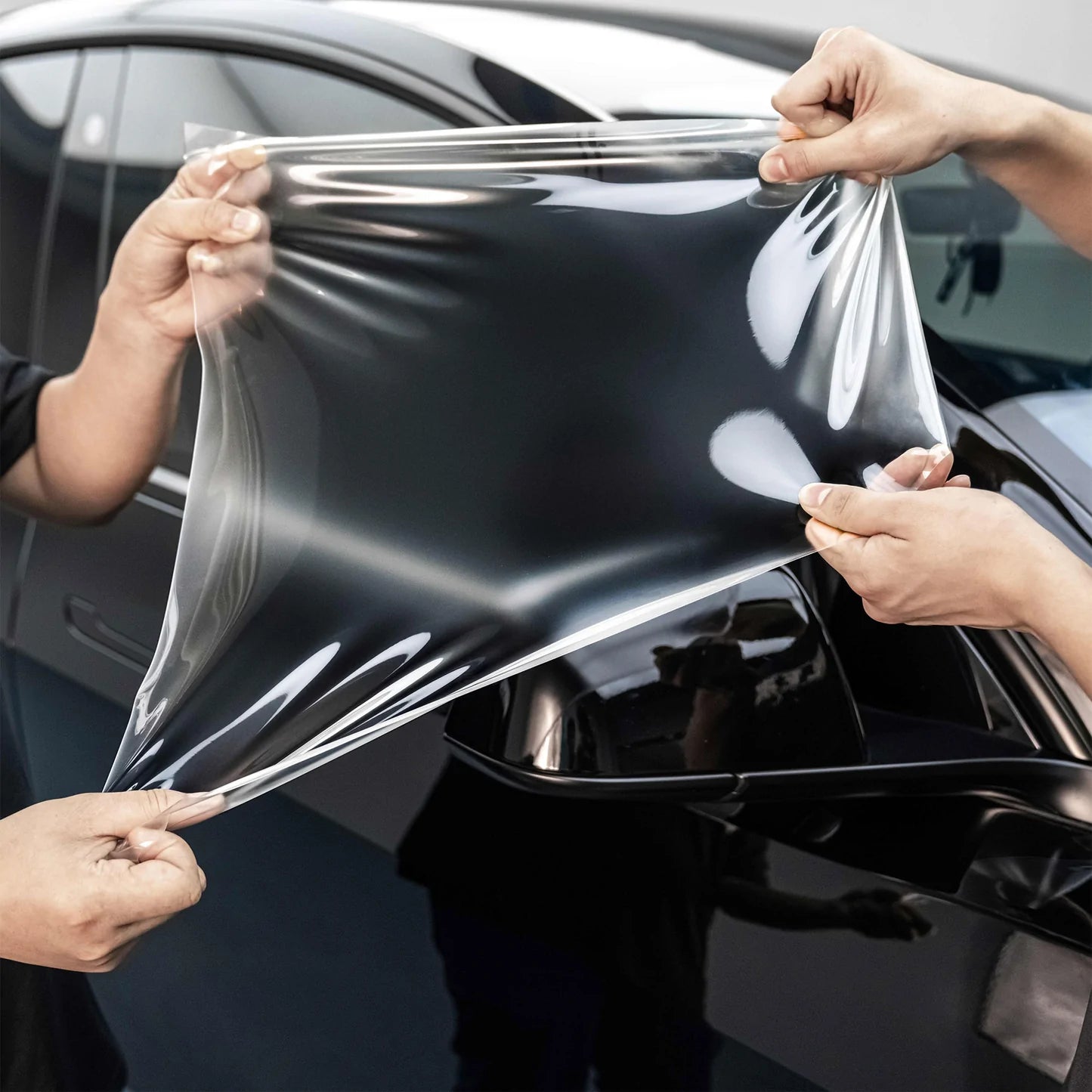
Prep is everything. Wash the panel with clay bar and iron remover, wipe with rubbing alcohol, and check paint cure time (30 to 90 days for fresh paint). Skip any of these and the film won't stick properly or will bubble later.
During install, squeegee slowly from center outward to avoid trapped air. Wrap edges properly, since rough edges collect dirt and cause most "edge yellowing" complaints on white and silver cars. Work in a clean, dust free room between 18 and 24°C. Thicker PPF (around 8 mil) stretches over curves without lifting, while thinner vinyl (3 to 4 mil) lifts sooner on bumpers and mirrors.
Choosing Coverage and Placing Your Order
Think through these questions before you order.
How do you drive? Lots of highway driving justifies front end or full body PPF light local use may need less protection. DIY or hire someone? A beginner can try a hood or mirror caps, but a full car job takes more practice for clean edges, so it's worth paying a professional for the whole car.
How much film? Depending on your car's shape and coverage plan, measure your own car rather than guessing. Check clarity first with a sample kit, held against your car's paint in daylight, not store lights. Read the warranty terms and check what's covered before you buy; this tells you how confident the maker is in the film's long term clarity.
Common Myths, Corrected
"Clear wrap makes your car scratch-proof." Not true. It absorbs light impacts, but can still get scratched. The good news is those scratches stay on the film, not your paint, so your car keeps looking fresh underneath.
"Clear film is invisible on any car color." Not always true, especially on white and light silver cars. Still, a quality film installed well stays nearly invisible on most colors and keeps your paint looking newer for years.
"You can wrap over rusted or peeling paint and it'll be fine." Not true. The film follows whatever is underneath, so failing paint keeps failing and pulls the film up with it. Fix the paint first, and the film locks in that fresh finish and protects it for the long run.
Clear wrap really does protect your car's paint well, but only if you pick the right film and it's installed correctly for your paint's condition, color, and how you drive. Get those things right, and it's about the closest thing to invisible armor your car can have.
Frequently Asked Questions
What is the cost of a clear wrap?
If you want to fully cover your vehicle with a clear wrap, be ready to spend around $10,000. This is just a ballpark figure. A lot depends on the size of the vehicle and the parts you want to cover with the clear wrap.
Are clear wraps worth it?
With the amount of shield they provide to the paint underneath against damage, they are definitely worth every penny. Your car's exterior looks as good as new and its resale value is increased.
Is clear wrap known by any other name?
Yes, it is known by many other names in the automotive world such as Clear Bra, Clear Mask, Invisible Shield, Paint Protection Film, Rock Chip Protection, Car Scratch Protective Film, and so on.
What is better: ceramic coating or clear wrap?
Clear wrap provides better protection against damage caused by external harsh elements as compared to ceramic coating. Clear wrap has the ability to absorb the damage and it does not reach the paint.
The Final Word
To recapitulate, calling clear wrap paint protection film makes complete sense. Since its whole idea is to protect the paint. Installing a good quality clear wrap will be an intelligent decision, since it prevents the automobile from devaluing by keeping its paint intact. It does not spoil the original look of your car, instead adds more shine to it. So better invest your money into something worthwhile.
- Choosing a selection results in a full page refresh.

!